

Navigating through difficult terrain requires specialized equipment designed to withstand the most demanding conditions. Whether you are working on railway tracks, in forested areas, or on other challenging surfaces, choosing the right rough terrain equipment can make the difference between a successful project and costly complications. This in-depth review examines the top-performing machines on the market, analyzing their technical features, reliability, and adaptability to harsh environments.
All-terrain vehicles for access to remote areas
All-terrain vehicles form the backbone of many operations in difficult terrain. The most efficient models combine power, maneuverability, and durability to deliver optimal mobility.
Tracked vehicles stand out in marshy or forest environments. Their propulsion system distributes weight over a larger surface area, reducing ground pressure and minimizing environmental impact. Recent models incorporate advanced hydraulic systems that allow instant adaptation to terrain variations.
For railway operations, rail-road vehicles provide exceptional versatility. These machines can seamlessly transition from rails to roads, optimizing transport times and reducing logistical costs. Their robust design withstands constant vibrations and heavy loads typical of railway environments.
- Load capacity tailored to specific operational needs
- Integrated safety systems for operator protection
- Simplified maintenance to reduce downtime
- Compatibility with a wide range of accessories and attachments
Specialized rough terrain equipment for forest clearing
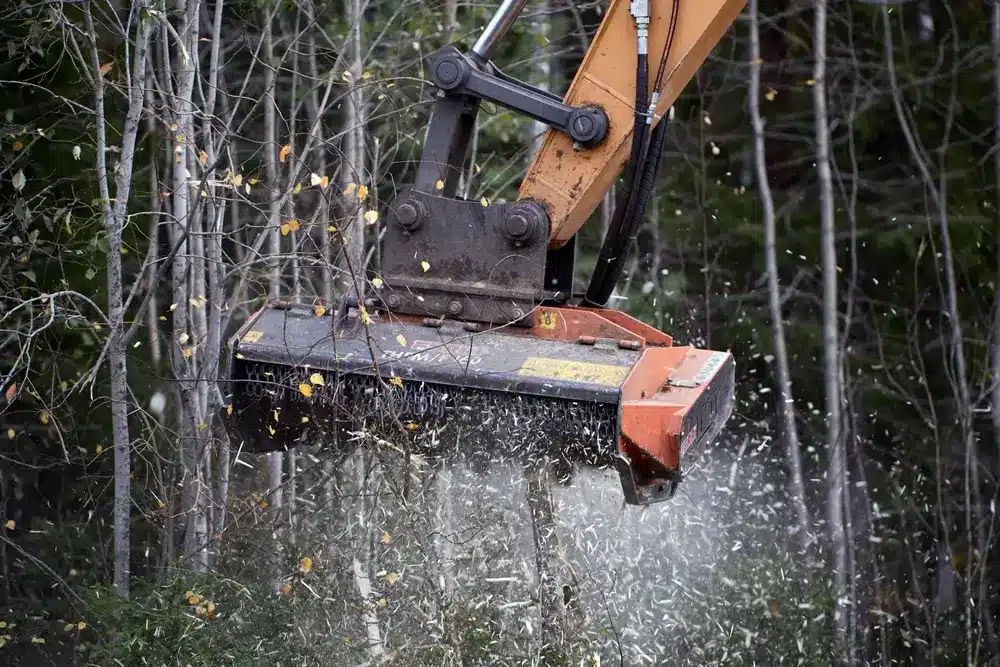
Forest clearing requires equipment capable of maneuvering between trees while efficiently handling dense vegetation. Modern forestry mulchers and brush cutters integrate advanced technologies to maximize productivity while preserving the ecosystem.
Rotary cutting heads represent a major innovation in this field. Their design enables clean cutting of vegetation without damaging the soil, which is crucial for maintaining long-term forest health. Integrated mulching systems immediately transform residues into organic matter, naturally enriching the soil.
Cab ergonomics have also evolved significantly. New models offer panoramic visibility and intuitive controls, reducing operator fatigue during long working sessions. Advanced air filtration systems protect against particles and allergens present in forest environments.
Railway machines for track maintenance
Maintaining railway infrastructure requires specialized machines capable of operating in confined spaces while maintaining high safety standards. Modern equipment integrates real-time monitoring technologies to optimize maintenance operations.
Automatic tamping machines are revolutionizing track maintenance by automating ballast stabilization. These units use laser sensors to detect irregularities and automatically adjust rail positioning. This technological precision ensures consistent quality while reducing the need for specialized labor.
For heavy renovation work, work trains combine multiple functions into a single mobile unit. These integrated systems can simultaneously replace rails, renew ballast, and adjust track geometry, significantly optimizing maintenance windows.
Evaluation criteria for selecting the right equipment
Selecting suitable rough terrain equipment requires a rigorous analysis of several critical factors. Reliability is the primary criterion, especially in environments where breakdowns can compromise safety and generate substantial costs.
Ease of maintenance directly impacts long-term profitability. Equipment designed with accessible service points and standardized components reduces downtime and service costs. Onboard diagnostic systems enable predictive maintenance, anticipating service needs before failures occur.
Adaptability to local conditions is another decisive factor. Climate variations, soil types, and regulatory constraints influence the optimal choice. Manufacturers now offer modular configurations that allow rapid adaptation of equipment to the specific requirements of each project.
- Assessment of total cost of ownership over the equipment lifecycle
- Availability of technical support and spare parts
- Compliance with safety and environmental standards
- Projected return on investment based on operational volume
Technological innovations and future trends

The rough terrain equipment industry is undergoing rapid transformation thanks to technological advancements. The integration of IoT sensors now enables continuous performance and condition monitoring, paving the way for predictive maintenance and operational optimization.
High-precision GPS navigation systems are transforming how operators navigate difficult terrain. Combined with detailed topographic mapping, these technologies enable optimized route planning and reduce the risk of equipment getting stuck or damaged.
The gradual electrification of terrain equipment addresses growing environmental concerns. High-capacity batteries and fast-charging systems now make it possible to deploy electric equipment in environments previously dominated by combustion engines.
The future of rough terrain equipment points toward increased integration of artificial intelligence and automation. These technologies promise to further enhance operational safety while optimizing productivity in challenging environments.
Choosing the right equipment for your difficult terrain operations requires in-depth expertise and a precise understanding of your specific needs. Contact our experts to receive personalized advice and discover the solutions best suited to your rough terrain access projects.